
SUAPS at Hessdalen: Connecting UAP Research, Science and Field Investigation
SUAPS was represented at the 2026 Hessdalen Field Trip & Conference in Norway, bringing together researchers, academics, experiencers and citizen scientists from several countries for a unique combination of scientific presentations, discussion and field investigation.
From August 28-30, 2026, Project Hessdalen hosted its Field Trip & Conference in Trondheim and the Hessdalen Valley, bringing together an international group of researchers and participants interested in the scientific investigation of Unidentified Anomalous Phenomena (UAP).
The event was structured around three complementary dimensions: the establishment of measurable evidence, the social sciences perspectives on the phenomenon, and the human and experiential dimension. The conference programme included presentations on the history and research of Project Hessdalen, current instrumental measurements, anthropology, experiential accounts, and investigations of UAP cases from Chile.
The conference opened with a presentation by Erling P. Strand, one of the founders of Project Hessdalen, who reviewed the history of the project and its principal findings since its creation in 1983.
Rainer Haseitl then presented the current instrumental research being conducted in Hessdalen, including the cameras and sensors operating in the valley, recent measurements and observations, and plans for future equipment and expeditions.
The next segment brought presentations by Francisco Mourão Corrêa, with Epistemology and Scientific Legitimacy, and Håkon Fyhn, who explored an anthropological perspective on the Hessdalen phenomenon, addressing its scientific, experiential and social dimensions.
The conference also included contributions from Anna Scott, Kate Thorvaldsen and Anneli Sarre, who brought different perspectives on personal experiences of contact and their interpretation. Anna Scott presented her journey From Experiencer to Investigator, while Kate Thorvaldsen shared her personal account in A Hybrids Story. Anneli Sarre | also contributed a shorter presentation focusing on her own experiences of contact.
Together, these contributions highlighted the importance of taking personal testimony seriously as part of the broader UAP research landscape, while recognising the need to distinguish the experience itself from interpretations concerning its nature or origin.
Close to the end of the day, Rodrigo Fuenzalida Director of the Chilean UFO Research Group AION, offered a presentation on cases from Chile and Patagonia, supported by photographic and video material.
A particularly interesting addition to the programme came at the last minute with Artem Bilyk, from Ukraine, a professor at a university in Kyiv. His presentation introduced the work of the Ukrainian scientific research centre Zond, including its approach to anomalous phenomena, the use of a broad range of observational and scientific instruments, and methodological approaches to UAP identification.
One of the most distinctive aspects of the event was that the conference did not end when the presentations were over.
On the following day, participants travelled from Trondheim to Hessdalen Valley, visiting several of the locations associated with Project Hessdalen's long-running observational programme. The field trip included visits to the Blue Box and White Box, as well as several observation points throughout the valley.
The Blue Box in particular represents an important part of Hessdalen's history as an experimental environment for the automated detection and recording of anomalous phenomena. Project Hessdalen's current programme continues to focus on deploying cameras, environmental sensors and other instruments, with the broader objective of collecting high-quality data and making it available for analysis.
For the participants, the field trip provided an opportunity to move beyond presentations and directly experience the geographical, environmental and observational context in which the Hessdalen research takes place.
This combination of instrumental data, scientific discussion and direct field experience is one of the characteristics that makes Hessdalen particularly relevant to the development of UAP research.
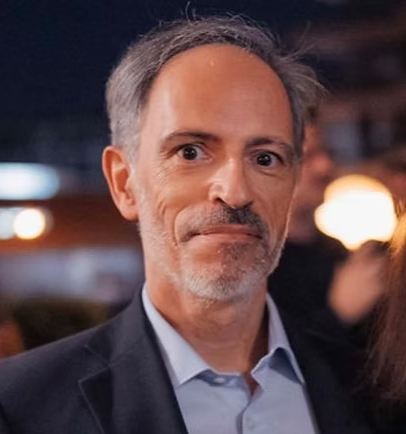
SUAPS was represented by Francisco Mourão Corrêa and Michael Cifone.
Francisco Mourão Corrêa delivered a presentation examining how different forms of evidence should be evaluated in UAP research and why the field would benefit from clearer and more rigorous Standards of Evidence.
Michael Cifone and Francisco also took part in discussions with researchers and participants throughout the event. These informal conversations provided an important opportunity for SUAPS outreach, allowing the Society to introduce its work and research initiatives to an international audience.
SUAPS information materials and flyers were also distributed during the event, helping to strengthen connections between the Society and researchers working in different national and disciplinary contexts.
Perhaps the most valuable aspect of the Hessdalen gathering was the diversity of approaches represented.
Instrumental research, physics and engineering were present alongside anthropology, social science, experiential testimony, case investigation and epistemological reflection.
Rather than requiring these perspectives to compete with one another, the event created an environment in which they could be brought into dialogue.
This is particularly significant for SUAPS, whose mission is to contribute to the development of UAP studies as a serious, interdisciplinary field of research.
Hessdalen itself provides an especially appropriate setting for that conversation. For more than four decades, the valley has served as a place where unusual observations have been documented, measured and investigated, while also becoming a cultural and experiential reference point for the wider UAP community.
The 2026 Field Trip & Conference demonstrated the value of bringing these different dimensions together: from data to interpretation, from the laboratory to the field, and from individual experience to collective scientific inquiry.
For SUAPS, the event was therefore not only an opportunity to present its work, but also to listen, establish new connections and strengthen an international network of researchers committed to understanding UAP through rigorous and open-minded investigation.


Comments