
SUAPS Represented at Parliamentary Colloquium on UAP Research at the French National Assembly
Paris, France — June 29, 2026

On June 29, 2026, the French National Assembly in Paris hosted a parliamentary colloquium devoted to the scientific and institutional study of Unidentified Aerospace Phenomena (UAP), under the title “La recherche sur les phénomènes aérospatiaux non identifiés au-delà des fantasmes” — Research on Unidentified Aerospace Phenomena Beyond Fantasies.
Organized by Members of Parliament Pierre Henriet and Arnaud Saint-Martin, the colloquium brought together representatives of French and European scientific institutions, researchers, and specialists working across different dimensions of UAP research.

The event was notable not simply because it took place within the French Parliament, but because of the way the subject was framed.
From the outset, the organizers emphasized that the purpose was not to promote particular explanations for UAP, but to consider how observations that remain unexplained can be approached through rigorous scientific and institutional frameworks.
As Pierre Henriet put it during the opening of the colloquium:
“When we speak of unidentified phenomena, we describe the state of our knowledge, not the nature of the thing.”
This epistemological distinction set the tone for much of the day's discussion. Rather than focusing primarily on extraordinary hypotheses, the colloquium addressed questions concerning data collection and analysis, research methodologies, institutional responsibilities, scientific governance, transparency, and international cooperation.
The composition of the event reflected this broader perspective.
France's long-standing institutional experience, represented by GEIPAN/CNES, was complemented by contributions from organizations and researchers approaching UAP from different disciplinary and institutional perspectives.
Among the participants were representatives of GEIPAN, CNES, the SIGMA 2 commission of 3AF, the European Space Agency (ESA), as well as researchers from the social sciences and other fields.
The contribution of Pierre Lagrange, a sociologist of science, was particularly illustrative of the interdisciplinary character of the meeting. His intervention invited consideration not only of the phenomena themselves, but also of the ways in which societies construct categories of knowledge, establish boundaries around legitimate scientific inquiry, and shape the social reception of anomalous phenomena.
This broader perspective reflects an increasingly important development within UAP Studies: the recognition that understanding these phenomena may require contributions from multiple disciplines, including physics, engineering, statistics, history of science, sociology, anthropology, philosophy, and phenomenology.
One of the central themes emerging from the colloquium was the relationship between documenting unexplained observations and developing broader research programs capable of investigating them.
France's GEIPAN represents one of the world's longest-standing institutional approaches to UAP, with a strong emphasis on the systematic collection, investigation, classification, and public availability of case information.
At the same time, the discussions in Paris reflected a growing interest in how such accumulated data might contribute to wider interdisciplinary research agendas, including comparative methodologies, modelling, technological approaches, and international collaboration.
Rather than viewing these approaches as competing, the colloquium highlighted their potential complementarity: reliable research depends upon reliable data, while meaningful scientific progress requires the ability to move from documentation toward questions that can generate, test, and revise explanatory models.
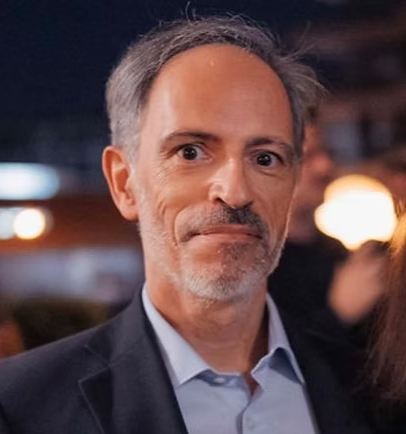
The Society for UAP Studies (SUAPS) was represented at the colloquium by Francisco Mourão Corrêa, Director for European Academic & Strategic Outreach, and Edoardo Russo, SUAPS Advisory Council Member.

The participation provided an opportunity to present SUAPS's mission within an emerging European network of researchers and institutions working toward a more rigorous and interdisciplinary approach to UAP Studies.
The Society's mission — to contribute to the scientific, methodological, ethical, and institutional foundations of UAP Studies — was particularly aligned with the themes of the Paris meeting.
Beyond the formal sessions, the colloquium also provided valuable opportunities for dialogue and networking.
With the support of Edoardo Russo, (who is also representative of the Centro Italiano Studi Ufologici - CISU), Francisco Mourão Corrêa was introduced to several French researchers, including Jean-Pierre Rospars, Gilles Durand, and Charles-Maxence Layet.
The meeting also provided an opportunity to reconnect with researchers with whom SUAPS already has established relationships, including Philippe Ailleris (ESA), Michaël Vaillant, Christian Peters, and Jacques Vallée.
These informal exchanges were an important part of the value of the Paris meeting, reinforcing existing relationships while opening possibilities for future European collaborations.
The Paris colloquium did not produce a single major scientific announcement or a new explanation for the UAP phenomenon.
Its significance lies elsewhere.
By bringing questions of UAP research into the French National Assembly, the meeting demonstrated a growing willingness to consider the subject within the frameworks of scientific inquiry, public policy, institutional responsibility, and international cooperation.
For SUAPS, this represents an important development.
The emergence of UAP Studies as a credible interdisciplinary field will depend not only on individual research projects or discoveries, but also on the gradual construction of the intellectual and institutional infrastructure that allows such research to develop.
This includes shared methodological standards, ethical frameworks, scientific governance, education, scholarly communication, and international networks.
In this sense, the Paris colloquium represented more than a discussion about unexplained phenomena.
It was a discussion about how a field of inquiry can become a mature field of knowledge.
And that question lies at the heart of the Society for UAP Studies.


Comments